The Delivery Promise Gap in Furniture Retail
A sale isn't finished when the RSA closes it or the order clears. It's finished when two people carry a piece through a stranger's front door without breaking anything.
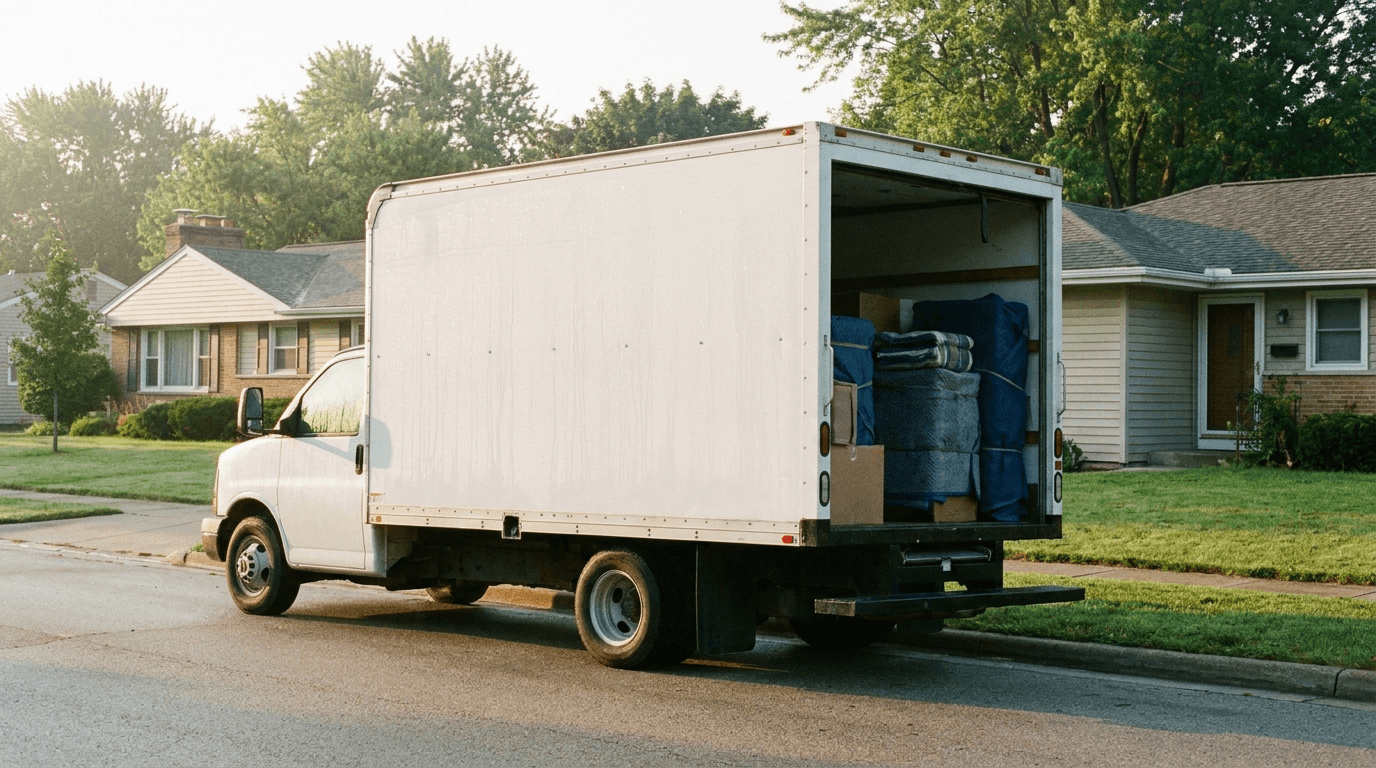
A sectional leaves the warehouse on a Tuesday morning. Somewhere between the dock and the customer's living room, two heavy pieces have to come off a truck, through a doorway, and around a tight turn without touching a wall or the hardwood floor the customer just refinished. Nobody photographs the scuff that was already on that baseboard. The crew apologizes and drives off, and the store hears about the disputed damage three days later in a call that opens with a refund demand.
That scene isn't a delivery problem. It's an operations problem wearing a delivery costume. The order was written correctly, the piece was in stock, the financing cleared, the RSA closed the sale cleanly — and the store still loses the customer, because the last four hours of the transaction ran on less software than the register that rang it up.
Furniture is one of the only retail categories where the product has to travel through a customer's front door to finish the sale, which makes the final mile the most expensive, most failure-prone, and least instrumented part of the business. It's also the part the customer remembers longest. Nobody reviews how smooth the credit application was. They write about whether the couch showed up on time, in one piece, from a crew that called ahead.
Why Is Furniture Delivery the Hardest Final Mile in Retail?
Furniture is big, heavy, and easy to damage, and it has to go inside a home rather than sit on a porch. Most pieces need two people, a specific access route, and a customer present to accept them, so a missed window or a scuffed corner doesn't cost a reshipping label. It costs an entire second trip, on a truck that only has so many stops in a day.
A parcel carrier leaves a package on a porch whether or not anyone answers. A furniture crew can't. That means a weekday appointment window, a customer who has to be home, and a delivery that either completes cleanly or turns into a whole new scheduling problem — there's no such thing as a small furniture delivery failure. Every one is a full redo, with the truck, the crew, and the customer's afternoon all booked again from scratch.
What Changed to Make Real-Time Delivery Visibility a Baseline Expectation?
Customers now compare a furniture delivery to every parcel tracking experience they have, not to other furniture stores. Real-time visibility has moved from a premium differentiator to a baseline expectation in less than a decade, and furniture retail is one of the last categories to catch up.
A thirty-dollar phone case arrives with a live map and a push notification when it's three stops away. A three-thousand-dollar sectional too often arrives with "someone will call the morning of, sometime after 8." That mismatch reads as amateurish even when the crew itself is excellent, because the customer is grading the whole experience against every other package that shows up at their door — not against the crew that unloads it. The showroom can be beautiful and the point-of-sale experience smooth, and the store still loses to an eight-hour window and a call that never came.
What Are the Specific Failure Modes Draining Delivery Margin?
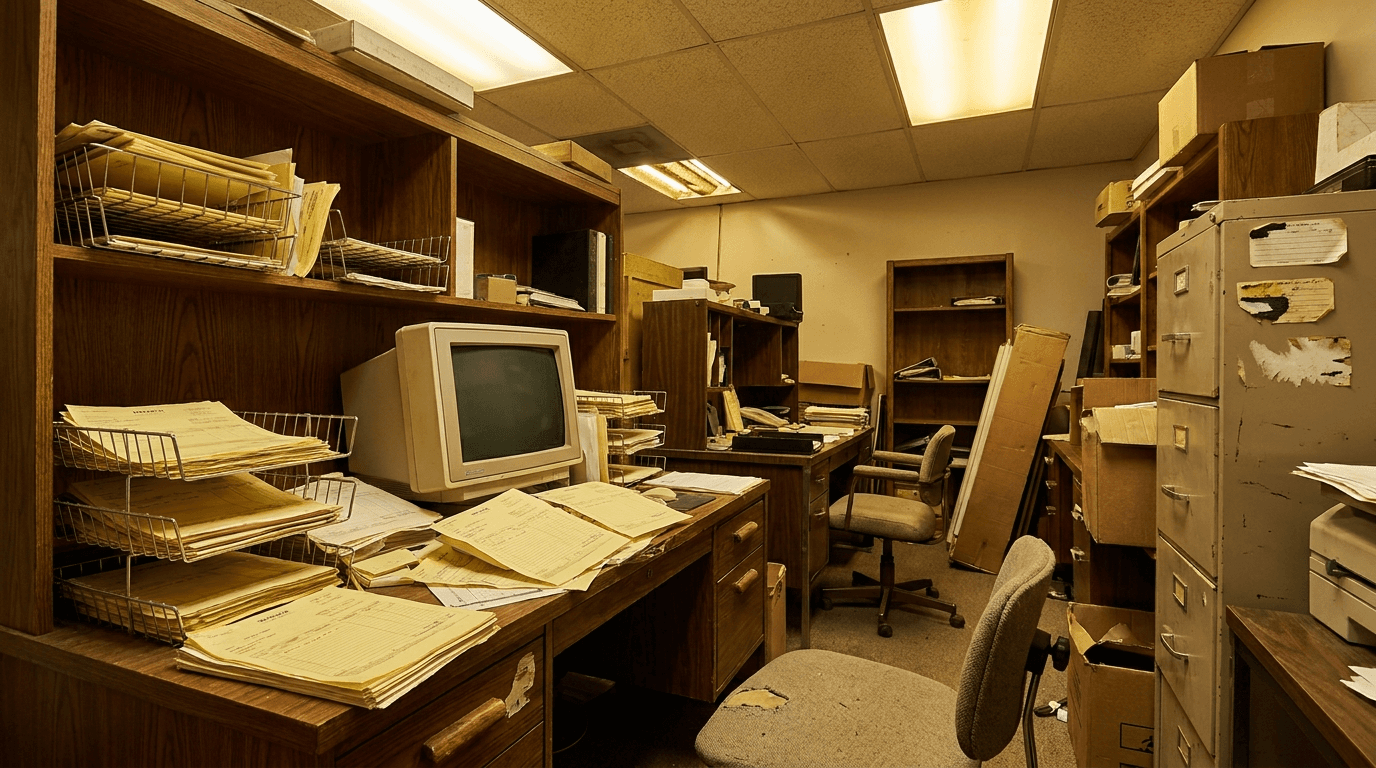
Almost every delivery complaint traces back to one of five repeatable, fixable failure modes, not bad luck or a careless crew. They show up in the same order at store after store, because they all come from running the final mile on paper and memory instead of a system.
- Routes built by hand the night before. A dispatcher redraws the stop order from memory and a stack of tickets, so nobody upstream can see the sequence until the truck is already moving.
- No proof of delivery beyond a paper signature. It proves someone was home. It proves nothing about the piece's condition or what happened in the twenty minutes the crew was inside.
- Damage discovered at the door with no photo record. Without a timestamped photo taken before the piece leaves the truck, there's no way to separate transit damage from damage that was already there.
- The customer who was never called ahead. A missed pre-call turns a scheduled delivery into a surprise, and a surprise is the most common reason a customer isn't home when the truck arrives.
- The reschedule nobody told the warehouse about. The customer moves the appointment by calling the store, and the change never reaches the crew building tomorrow's route.
Each of these is small on its own. Together, they're why the final mile eats more margin than almost anything else in fulfillment, and why it produces more one-star reviews than a bad showroom visit ever does.
What Does a Well-Run Delivery Operation Actually Look Like?
A well-run operation looks like the same day from two vantage points that finally agree: the customer sees a tight window and a crew that shows up when promised, and the store sees a route built from real orders, with proof of delivery and any exceptions recorded automatically against the sale.
- 01The night before. Customer: gets a message confirming a specific window, with a name and photo of the crew. Store: the route is built from the day's actual orders, not redrawn by hand at 9 p.m.
- 02Morning of. Customer: watches the truck's progress the way they would a food delivery. Store: the dispatcher sees exactly where every truck stands against its promised windows, without calling a driver's cell phone.
- 03One hour out. Customer: gets a call or text that the crew is close, with time to clear a path. Store: the crew already has the access notes the RSA collected at the sale, so nobody discovers the tight stairwell for the first time holding a couch.
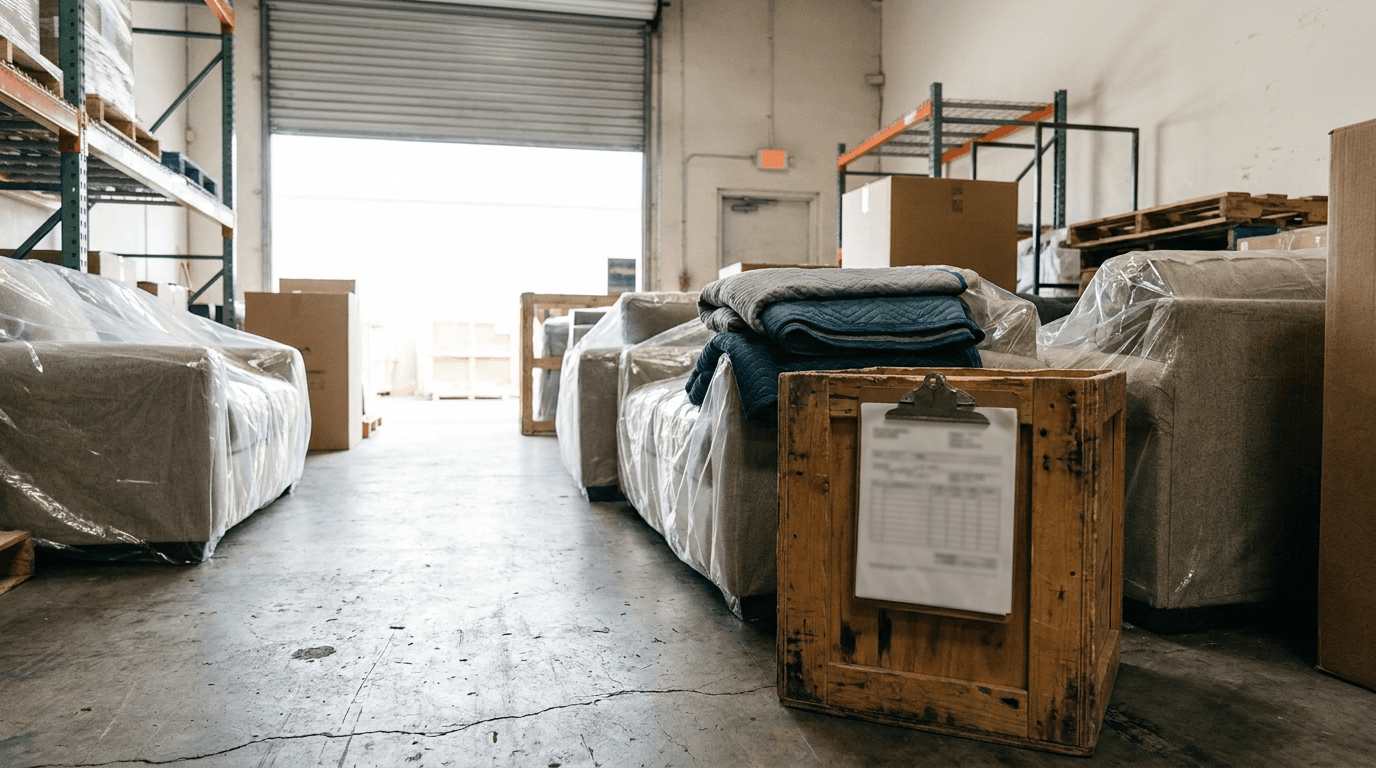
- 04At the door. Customer: watches the crew photograph the piece before it comes off the truck and again once placed. Store: that photo attaches to the order automatically, with no separate form and no paper riding around in the glovebox.
- 05If something goes wrong. Customer: a refusal or damage claim is logged on the spot, with photos, instead of becoming a call three days later. Store: the exception shows up against the order itself, visible to the warehouse, accounting, and the RSA who sold it.
Can Delivery Be a Marketing Asset Instead of Just a Cost Center?
Yes, and for an independent store it may be the strongest one available. A customer who gets a tight window, a call ahead, and a crew that treats their home carefully tells other people about it, in a category where trust in the seller is a large part of what's being bought. A national chain can match price and often selection; it's much harder to match a crew that calls the customer by name and already knows about the stairwell. The same delivery data that prevents a dispute — routes, windows, photos, exceptions — also feeds analytics on which crews, routes, and manufacturers produce the fewest problems.
What Should a Store Measure If It Measures Delivery Performance at All Today?
If a store tracks nothing else about delivery, four numbers cover most of what matters: on-time percentage against the window actually given to the customer, the failed or refused delivery rate with a reason attached, the second-trip rate, and the damage rate by manufacturer.
None of it matters for its own sake. Final-mile problems compound quietly — a missed window here, an undocumented scuff there — until they surface as a bad review or an RSA who stops trusting the delivery date they're quoting on the floor. The showroom sells the piece; the truck delivers the store's reputation. Closing that gap isn't a separate delivery project — it's the same order and the same system, followed all the way to the customer's living room.
Common questions
- What counts as a good on-time delivery rate for furniture?
- There's no single industry benchmark worth repeating, since stores define "on time" differently — some against a half-day window, others a two-hour one. What matters is picking one clear definition and tracking it against the window actually promised to the customer, not an internal warehouse target.
- Should furniture delivery be free or a paid line item?
- That's a pricing decision, not a delivery-operations one, and stores succeed either way. What breaks trust isn't charging for delivery — it's charging for a delivery experience that doesn't match what a customer now expects from any other package showing up at their door.
- How do we stop damage disputes after delivery?
- Most damage disputes aren't about whether damage happened. They're about who can prove when it happened. Photographing the piece before it comes off the truck and again once placed, then attaching those photos to the order, removes the ambiguity that turns a claim into a drawn-out argument.
- Do we need delivery routing software if we only run one or two trucks?
- A single truck with a good driver can run for years on a whiteboard. The gap usually shows up as volume grows or a second truck is added and nobody can see both routes at once — that's typically when missed windows and back-to-back failed trips start piling up.
- How do you calculate a failed or refused delivery rate?
- Divide stops that didn't end in a completed, accepted delivery — refusals, no-shows, reschedules initiated after the crew was already en route — by total scheduled stops for the period. The reason code attached to each failure matters more than the rate itself.
One Tap Commerce
Editorial desk
Written by the team that builds One Tap Commerce — the operating system for furniture retail. We work with independent and multi-location furniture retailers on catalog, point of sale, delivery, and the books.